
Aesthetic medical assistant vs. plastic surgery assistant vs. dermatology assistant: which career is right for you?
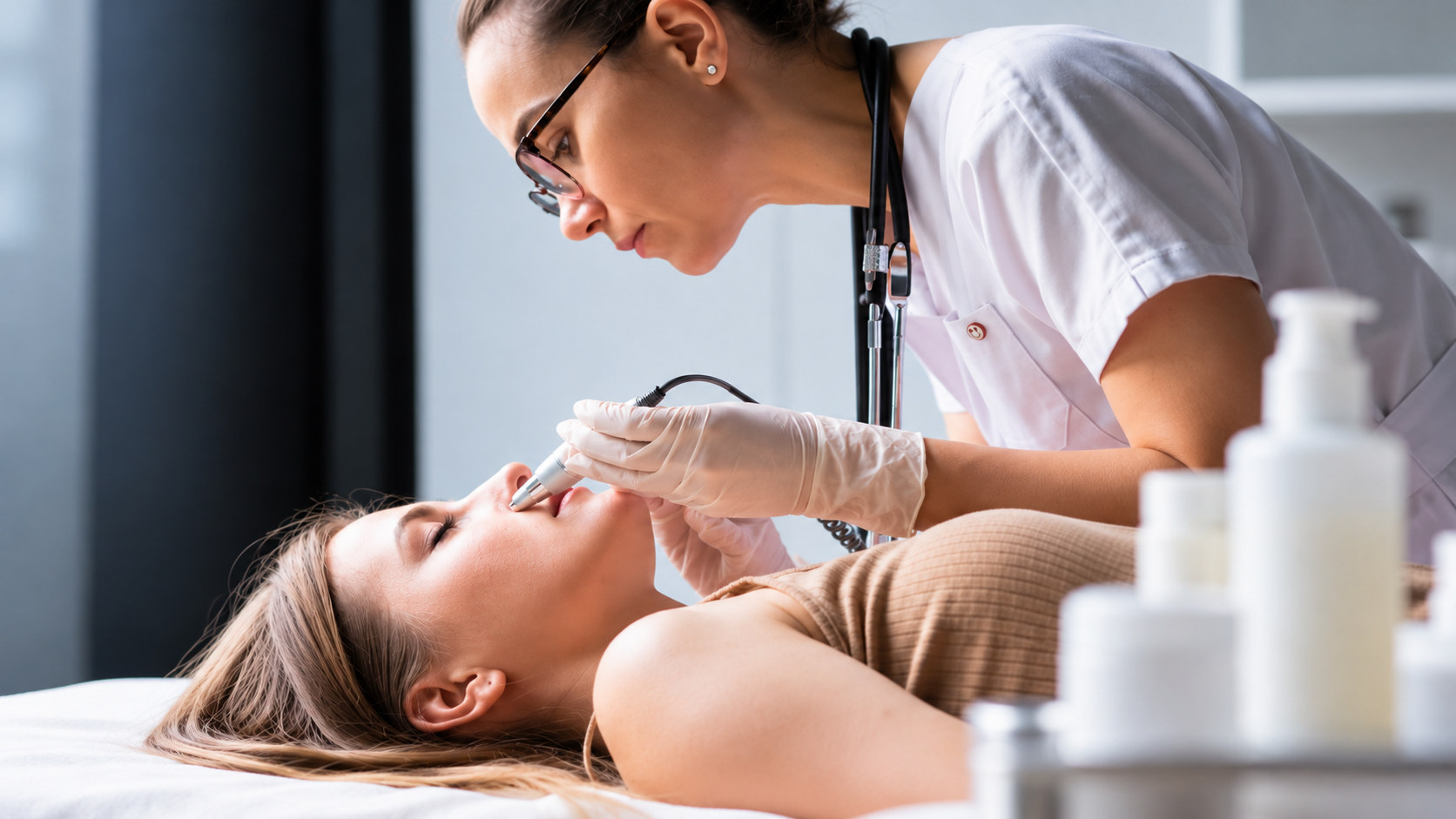
A practical comparison of three patient-facing career paths in medical aesthetics, plastic surgery, and dermatology.
Medical aesthetics, plastic surgery, and dermatology may look closely related from the outside. All three fields involve patient care, clinical environments, skin concerns, procedures, and detailed documentation. Yet the daily experience of working in each setting can be very different.
An aesthetic medical assistant may spend the day preparing treatment rooms, supporting consultations, taking clinical photographs, reviewing pre- and post-treatment instructions, and assisting licensed providers with the non-procedural parts of cosmetic care. A plastic surgery assistant is more likely to work around surgical consultations, preoperative preparation, postoperative follow-up, wound-care workflows, and coordination across a longer patient journey. A dermatology assistant typically supports a broader medical caseload that may include acne, eczema, psoriasis, suspicious lesions, biopsies, skin cancer care, and procedural dermatology.
The three titles are not regulated as identical national occupations. Employers may use different names for similar support roles, and the duties permitted to a medical assistant depend on state law, employer policy, training, supervision, and the nature of the task. The most useful way to compare these careers is therefore not by title alone, but by examining the clinical environment, patient population, daily responsibilities, pace, skills, and long-term opportunities associated with each path.
Three related careers, but three different professional identities
All three roles usually sit within the wider medical-assisting or allied-health workforce. Medical assistants commonly perform a combination of administrative and clinical duties, and those duties vary by specialty and employer. The U.S. Bureau of Labor Statistics notes that medical assistants may schedule appointments, record medical histories, measure vital signs, assist physicians during examinations, update medical records, and maintain supplies. Specialty practices then add their own workflows and expectations.
That specialty layer matters. A person who succeeds in a high-volume dermatology clinic may enjoy diagnostic variety and fast room turnover. Someone drawn to plastic surgery may prefer longer patient relationships, structured surgical pathways, and highly detailed postoperative coordination. A person attracted to medical aesthetics may value cosmetic treatment planning, patient education, photography, customer experience, and the blend of clinical care with practice growth.
Quick career comparison
| Category | Aesthetic Medical Assistant | Plastic Surgery Assistant | Dermatology Assistant |
|---|---|---|---|
| Typical setting | Med spa or aesthetic clinic | Plastic surgery office or surgical practice | Dermatology clinic |
| Main focus | Cosmetic treatment support and patient experience | Pre-op, post-op, and surgical-care coordination | Medical, surgical, and cosmetic skin care |
| Patient journey | Repeated elective treatments | Longer consultation-to-recovery pathway | Often shorter, varied medical visits |
| Pace | Moderate to fast | Structured, detail-heavy | Often high-volume and fast |
| Best fit | Service-minded, polished, organized | Calm, methodical, empathetic | Clinical, observant, adaptable |
What is an aesthetic medical assistant?
An aesthetic medical assistant, often shortened informally to AMA, is a medical assistant or clinical support professional who works in a medical aesthetics environment. Depending on the practice, that may be a medical spa, cosmetic dermatology office, plastic surgery clinic, laser center, or physician-led aesthetic practice.
The role is generally built around supporting safe, organized, and consistent patient care before, during, and after cosmetic treatments. The assistant does not automatically have authority to perform medical procedures simply because the workplace is a med spa. Delegated duties must remain within applicable state law and the individual’s verified training and supervision.
Typical aesthetic medical assistant responsibilities
- Preparing and disinfecting treatment rooms according to practice protocols
- Reviewing intake forms and confirming that required documentation is complete
- Recording vital signs and relevant patient information when assigned
- Taking standardized clinical photographs and maintaining image consistency
- Preparing supplies and assisting licensed providers during consultations or procedures
- Reinforcing provider-approved pre-treatment and post-treatment instructions
- Documenting product, device, or lot information according to clinic policy
- Monitoring room readiness, inventory levels, expiration dates, and restocking needs
- Escalating patient concerns or unexpected symptoms to the appropriate licensed professional
- Supporting scheduling, follow-up, patient communication, and the overall treatment experience
This path is often best suited to people who are interested in skin, cosmetic technology, treatment planning, patient communication, and highly polished service. In many practices, the strongest assistants understand that excellent aesthetics care is not only about what happens in the treatment room. It also depends on accurate records, consistent photography, infection control, patient expectations, follow-up, and knowing when a concern must be escalated.
What is a plastic surgery assistant?
The title plastic surgery assistant can refer to several different support positions. In some clinics it describes a medical assistant who works in a plastic surgeon’s office. In others, it may refer to a surgical technologist, clinical coordinator, nurse, physician assistant, or another allied-health professional. Job seekers should read the required credentials carefully rather than assuming the title has one universal meaning.

For a medical assistant working in plastic surgery, the role commonly follows the patient across the surgical pathway. The assistant may help prepare consultation rooms, collect information, support clinical photography, coordinate preoperative documentation, prepare patients for examinations, assist with postoperative visits, and communicate provider-approved instructions.
Typical plastic surgery support responsibilities
- Preparing rooms for surgical consultations and postoperative appointments
- Organizing clinical photographs before and after treatment
- Confirming completion of forms, histories, and provider-requested documentation
- Supporting preoperative checklists and patient education workflows
- Preparing examination supplies and assisting the surgeon or clinical team
- Supporting dressing-change and wound-care visits within delegated limits
- Tracking follow-up appointments and helping maintain continuity of care
- Recognizing and promptly escalating patient-reported warning signs
- Coordinating with patient coordinators, operating-room personnel, and administrative staff
- Maintaining strict privacy, documentation, and infection-control standards
Plastic surgery may appeal to professionals who like structured protocols, close attention to detail, and longer patient journeys. A cosmetic surgery patient may interact with the practice repeatedly, from inquiry and consultation to surgery preparation, early recovery, and longer-term follow-up. That continuity creates opportunities for assistants to become highly valuable team members, but it also requires emotional intelligence and calm communication. Patients may be anxious, uncomfortable, swollen, or concerned about whether their recovery is normal.
What is a dermatology assistant?
A dermatology assistant is usually a medical assistant working in a dermatology practice. Unlike a role focused primarily on elective cosmetic treatments, dermatology frequently combines medical, surgical, and cosmetic care. The assistant may support patients with chronic inflammatory conditions, infections, hair and nail disorders, suspicious lesions, skin cancer, and cosmetic concerns.

A typical day may involve rapid room turnover and a wide range of patient ages and conditions. The assistant might prepare a patient for a full skin examination, update medications and medical history, assist during a biopsy, label specimens according to practice procedure, prepare instruments, document information, and provide provider-approved aftercare instructions.
Typical dermatology assistant responsibilities
- Rooming patients and updating medical histories, medications, and allergies
- Preparing patients for skin, hair, or nail examinations
- Setting up supplies for biopsies, excisions, injections, or other office procedures
- Assisting the dermatologist or advanced practice provider during examinations
- Handling specimens and documentation according to clinic protocol
- Reinforcing wound-care or medication instructions approved by the provider
- Cleaning and preparing rooms and instruments between patients
- Supporting patients with chronic conditions who return for ongoing care
- Maintaining accurate records and communicating urgent concerns to the clinical team
- Helping the practice move efficiently through a high-volume schedule
Dermatology can be an excellent fit for people who enjoy medical variety, fast-paced clinical work, and continuous learning. The specialty requires comfort with visible disease, lesions, wounds, and potentially serious diagnoses. It also rewards strong observational skills. Assistants must document precisely and avoid offering independent diagnoses, treatment recommendations, or medical reassurance beyond their role.
Side-by-side comparison of daily responsibilities
| Responsibility | Aesthetic | Plastic Surgery | Dermatology |
|---|---|---|---|
| Patient intake and histories | Common | Common | Common |
| Vital signs | May be assigned | Common | Common |
| Clinical photography | Very common | Very common | Common |
| Treatment-room preparation | Very common | Common | Common |
| Preoperative workflows | Occasional | Central | Occasional |
| Postoperative follow-up | Occasional | Central | Procedure-dependent |
| Biopsy/specimen workflow | Uncommon | Uncommon | Common |
| Cosmetic consultation support | Central | Common | May be included |
| Inventory and supply control | Common | Common | Common |
| High-volume room turnover | Varies | Varies | Often common |
Which role offers the most patient interaction?
All three roles involve substantial patient contact, but the nature of the relationship differs.
In medical aesthetics, patient interaction often centers on goals, expectations, treatment preparation, comfort, and follow-up. The experience may feel more service-oriented because many treatments are elective and paid directly by the patient. Assistants who are warm, organized, and confident can have a major influence on retention and trust.
In plastic surgery, interaction is often deeper and extends over a longer period. Patients may need reassurance and clear communication before surgery and throughout recovery. The assistant must remain empathetic without making promises about results or independently interpreting symptoms.
In dermatology, interactions may be shorter but more medically diverse. One patient may have acne, the next a concerning lesion, and the next a chronic autoimmune condition. The pace can be faster, and concise communication becomes essential.
Training and certification
The baseline route into these specialties is often general medical-assisting education followed by specialty-specific training. The Bureau of Labor Statistics reports that medical assistants typically complete a postsecondary certificate or associate-degree program, although some enter with a high school diploma and learn through structured on-the-job training. Employers may prefer certification, and some states impose specific education, certification, or task requirements.
The CMA (AAMA) credential is one recognized medical-assisting certification. It covers broad clinical and administrative responsibilities rather than creating a separate license to practice medical aesthetics, dermatology, or plastic surgery. Specialty education can strengthen a candidate’s knowledge, but it does not expand legal scope of practice on its own.
Useful areas of specialty preparation
- Medical terminology, anatomy, physiology, and pharmacology fundamentals
- OSHA-aligned safety practices and infection prevention
- Patient intake, documentation, privacy, and clinical communication
- Standardized clinical photography
- Common aesthetic procedures and expected recovery patterns
- Preoperative and postoperative workflows
- Common dermatologic conditions and office procedures
- Recognition of red flags and escalation procedures
- Inventory, product handling, and traceability systems
- State-specific scope-of-practice and delegation requirements
Salary: why a simple comparison can be misleading
National labor data generally groups these workers under the broader medical assistant occupation rather than publishing separate official wage figures for aesthetic, plastic surgery, and dermatology assistants. The U.S. Bureau of Labor Statistics reported a median annual wage of $44,200 for medical assistants in May 2024. Actual compensation varies by state, metropolitan area, experience, certification, employer type, schedule, and the complexity of the position.
A role in a cosmetic practice is not automatically higher paying. Some aesthetic businesses may offer bonuses or incentives, but those arrangements vary widely and may depend on lawful job responsibilities and company policy. Surgical practices may pay more for candidates with relevant experience, while high-volume dermatology groups may offer clearer promotion structures and benefits. Applicants should compare the complete package: base pay, health insurance, paid time off, schedule, training, bonuses, workload, and advancement potential.
Career growth and advancement
Aesthetic medical assistant pathway
Aesthetic medical assistants may advance into senior clinical support, lead medical assistant, treatment or clinical coordinator, trainer, inventory lead, patient experience manager, or practice-management roles. Some pursue additional formal education for licensed healthcare careers, but those pathways require separate qualifications.
Plastic surgery assistant pathway
Experience in plastic surgery can lead toward senior medical assistant, preoperative or postoperative coordinator, surgical scheduler, patient coordinator, office manager, or clinical operations roles. Employees with separate nursing, surgical technology, or physician-assistant credentials may follow different clinical pathways.
Dermatology assistant pathway
Dermatology assistants may progress to lead medical assistant, clinical trainer, biologics or medication coordinator, Mohs support coordinator, clinical supervisor, or practice-management positions. The broad exposure to medical and procedural dermatology can also provide valuable experience for further healthcare education.
Which career is right for you?
Choose aesthetic medical assisting if…
- You are strongly interested in cosmetic treatments, skin health, and aesthetic technology.
- You enjoy combining clinical organization with a high-touch patient experience.
- You are comfortable discussing expectations while staying within approved information.
- You like photography, treatment-room preparation, follow-up, and operational detail.
- You want to work in a med spa, cosmetic dermatology office, or aesthetic clinic.
Choose plastic surgery support if…
- You prefer structured surgical pathways and detailed checklists.
- You communicate calmly with anxious or recovering patients.
- You value longer-term patient relationships and continuity of care.
- You are interested in preoperative preparation and postoperative workflows.
- You work well with multidisciplinary clinical and administrative teams.
Choose dermatology assisting if…
- You enjoy medical variety and learning about skin, hair, and nail conditions.
- You are comfortable in a fast-paced clinic with frequent room turnover.
- You have strong documentation and observational skills.
- You are comfortable assisting with minor office procedures and specimen workflows.
- You want exposure to medical, surgical, and possibly cosmetic dermatology.
Important scope-of-practice considerations
Medical-assisting scope of practice varies across the United States. The American Association of Medical Assistants emphasizes that state laws differ and that some states classify medical assistants as unlicensed personnel. A clinic’s job description cannot legally authorize a task that state law prohibits.
This is especially important in medical aesthetics, where job listings may use broad or inconsistent language. Assisting a licensed provider is not the same as independently performing a medical procedure. Before accepting a position, candidates should ask what tasks are expected, who delegates and supervises them, what training is provided, and how the practice verifies compliance with state law.
Final perspective
Aesthetic medical assistant, plastic surgery assistant, and dermatology assistant are not interchangeable careers, even when they share a medical-assisting foundation. The aesthetic role emphasizes cosmetic care, patient experience, treatment support, and practice presentation. Plastic surgery support follows a more structured surgical journey and requires excellent preoperative and postoperative coordination. Dermatology assisting offers the broadest exposure to medical skin conditions and often demands speed, precision, and comfort with clinical procedures.
The right choice is the setting in which your strengths are most useful. Look beyond the job title. Examine the actual duties, legal scope, supervision, patient population, training, schedule, and opportunities for advancement. A carefully chosen specialty can turn an entry-level support role into a long-term career in medical aesthetics and healthcare operations.
Sources and references
- U.S. Bureau of Labor Statistics. “Medical Assistants,” Occupational Outlook Handbook. Updated August 28, 2025.
- American Association of Medical Assistants. “Medical Assisting.”
- American Association of Medical Assistants. “State Scope of Practice Laws.”
- American Association of Medical Assistants. “Certification.”
- American Society of Plastic Surgeons. “Allied Health Affiliate Membership.”
- American Society of Plastic Surgeons. “Physician Extender.”
If there are topics you would like to see covered next, write to us at editorial@upsthetics.com.
Disclaimer: This content is for educational purposes only and does not constitute medical advice, legal advice, or professional guidance. It does not qualify readers to perform medical or aesthetic procedures.
FAQS
Can a general medical assistant move into aesthetics, plastic surgery, or dermatology?
Yes. Many practices hire candidates with general medical-assisting education and then provide specialty orientation. Applicants are stronger when they understand the specialty’s terminology, workflows, patient population, safety issues, and documentation requirements.
Is an aesthetic medical assistant the same as an esthetician?
No. A medical assistant and an esthetician follow different education and regulatory pathways. An esthetician’s permitted services depend on the state’s esthetics laws and license level, while a medical assistant’s delegated clinical tasks are governed by medical-assisting and healthcare rules. A person may hold both qualifications, but one title does not automatically grant the scope of the other.
Can these assistants perform injections, lasers, or other medical treatments?
Not automatically. Whether any task may be delegated depends on state law, professional licensing rules, supervision, training, and the specific procedure. Candidates and employers should verify requirements with the relevant state boards and legal guidance.
Which career has the best future?
The broader medical-assisting occupation has a strong national outlook. The Bureau of Labor Statistics projects employment of medical assistants to grow 12 percent from 2024 to 2034, with approximately 112,300 openings per year on average. The best specialty choice, however, depends on local employers, personal strengths, and whether the individual prefers cosmetic care, surgical continuity, or medical dermatology.
Which role is best for someone who eventually wants to manage a practice?
Any of the three can provide a useful foundation. Medical aesthetics offers exposure to patient experience, elective services, inventory, and business operations. Plastic surgery teaches complex coordination across consultations and recovery. Dermatology develops efficiency in a high-volume medical environment. The strongest future managers usually add skills in scheduling, compliance, team leadership, finance, patient communication, and performance measurement.
Stay Updated
Related posts
What Aesthetic Medical Assistants Actually Earn in the United States

Medical spa patient coordinator: duties, skills, salary, and career guide

Medical spa front desk receptionist: duties, skills, salary, and career path
About the author
