
Female hair transplant: how hair restoration works for women
May 1st, 2026
- Female hair transplant can be an option for some women, but candidacy depends on the type of hair loss, donor hair quality, and a proper medical evaluation.
- Women often experience diffuse thinning rather than clearly defined bald areas, which can make treatment planning more complex than in many male cases.
- FUE, DHI, and FUT are commonly discussed techniques, but no single method is right for every patient or every pattern of hair loss.
- Hair restoration is not limited to surgery alone. Depending on the underlying cause, non-surgical or medical approaches may be considered before or alongside transplant planning.
- For medical aesthetic assistants and estheticians in hair restoration settings, understanding these fundamentals supports clearer communication, better workflow support, and safer professional boundaries.
Hair thinning in women is common, but the conversation around treatment options is often oversimplified. A female hair transplant is not just a version of a male procedure adapted for women. Hair loss patterns, donor area limitations, and treatment goals can differ significantly, which is why evaluation matters so much.
For anyone researching female hair restoration, whether as a potential patient or as a professional working in a medical aesthetics setting, the most useful starting point is understanding what a hair transplant can do, what it cannot do, and why not every case is suited to surgery.
What a female hair transplant is
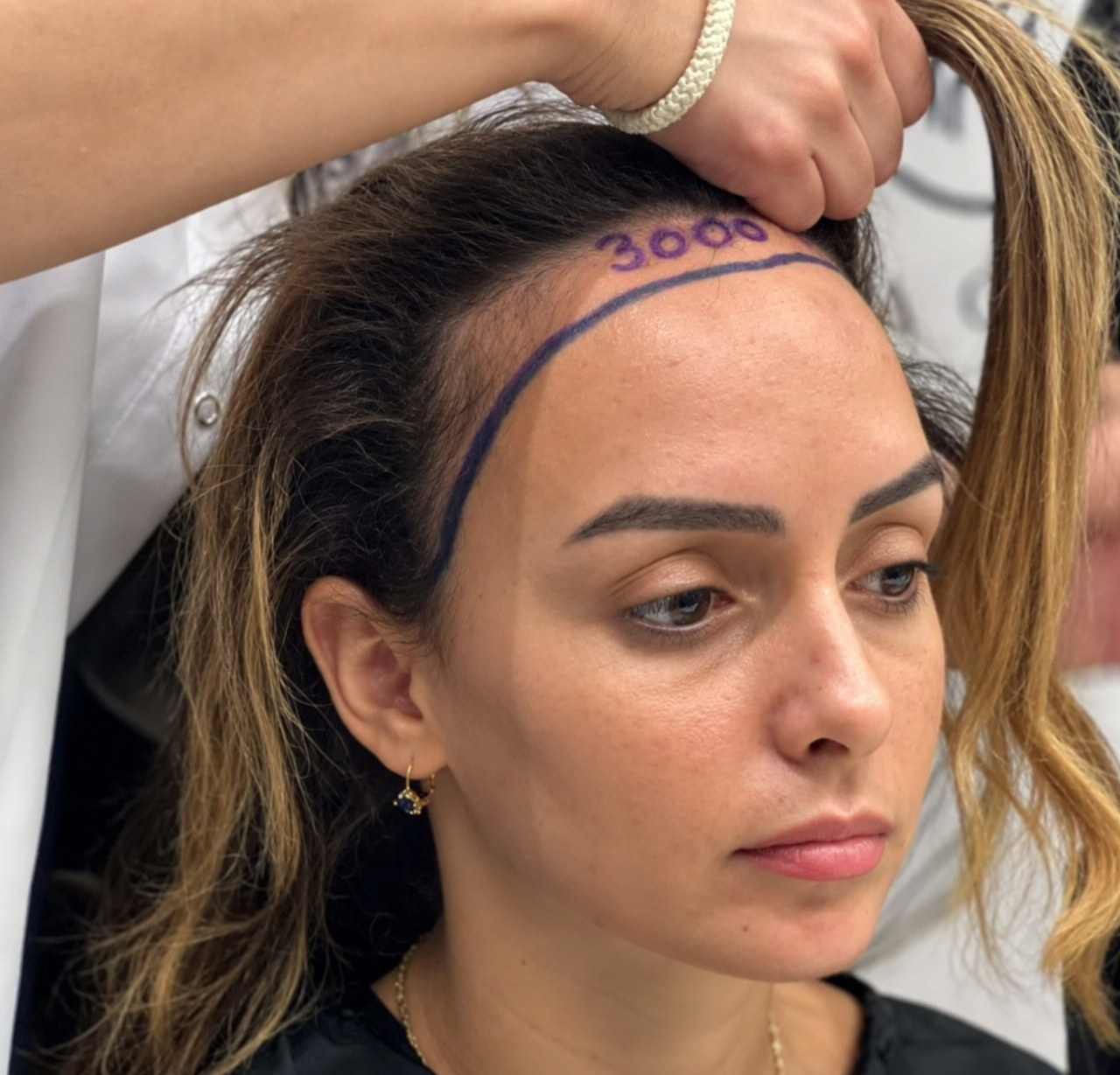
A female hair transplant is a surgical procedure that redistributes hair follicles from a donor area of the scalp to areas with reduced density. The goal is not to create new hair, but to move existing follicles from a more stable area to a thinner one in a way that can improve visible coverage.
In women, transplant planning may focus on concerns such as:
- Diffuse thinning through the top of the scalp
- A widening part line
- Reduced overall hair density
- Frontal hairline thinning in selected cases
- Coverage of localized areas after careful evaluation
The emphasis is usually on restoring balance and natural-looking density rather than producing a dramatic change. That distinction matters, especially in female patients whose hair loss may be more widespread or less sharply defined.
Why female hair loss needs a careful evaluation first
One of the most important facts about female hair transplant is that not all forms of hair loss are transplantable. This is where many online discussions become misleading.
Women are more likely than men to experience diffuse thinning across broader areas of the scalp. In practical terms, that can make it harder to identify a strong donor zone with enough stable hair for transplantation. It also means the underlying reason for the hair loss matters greatly.
Common factors behind female hair thinning
Female hair loss may be associated with a range of contributing factors, including:
- Genetic predisposition
- Hormonal changes
- Thyroid-related conditions
- Nutritional issues
- Chronic stress
- Traction-related hair loss from styling habits
- Inflammatory or scalp-related conditions
Because these causes are not the same, responsible hair restoration planning starts with diagnosis, not procedure selection. A transplant evaluation should assess whether the hair loss is stable, whether donor hair is sufficient, and whether another issue needs attention before surgery is even considered.
Why diagnosis comes before treatment planning
A transplant is a structural solution. It moves follicles. It does not treat every underlying condition that may be causing hair loss.
If hair thinning is still active or progressing, a patient may be advised to stabilize the situation first. In some cases, a non-surgical or medical approach may be discussed before a transplant becomes appropriate. This sequencing is a key part of ethical hair restoration care and an important concept for professionals in aesthetics to understand.
Who may be a candidate for a female hair transplant
Candidacy is individualized. No article can determine whether someone is a good candidate, but there are general factors commonly considered during evaluation.
Factors that often affect candidacy
A licensed professional may assess:
- The pattern and type of hair loss
- Whether the hair loss appears stable
- Donor area density and hair quality
- Scalp health
- The likely cause of thinning
- Whether treatment expectations are realistic
- Whether surgery aligns with the patient’s overall treatment plan
Women with more localized thinning may be evaluated differently from women with diffuse thinning across the entire scalp. If the donor area is also affected, surgical planning may be more limited or may not be appropriate.
When a transplant may not be the first step
A hair transplant may not be the first option when:
- The cause of hair loss is unclear
- Shedding is active or rapidly progressing
- Donor hair appears limited
- The scalp needs further medical assessment
- A non-surgical strategy may be more appropriate at the current stage
That does not automatically rule out future treatment. It simply highlights why female hair restoration often requires more nuanced planning than many people expect.
FUE, DHI, and FUT: what the differences really mean
Three techniques are commonly discussed in hair restoration: FUE, DHI, and FUT. These terms often appear in search results, but they are sometimes presented as if one method is universally superior. That is not how responsible case selection works.

FUE in female hair transplant
FUE, or follicular unit extraction, involves removing follicular units individually from the donor area. It is often discussed in relation to precision and the absence of a linear donor scar.
In female cases, FUE may be considered based on factors such as donor characteristics, hairstyle preferences, and the specifics of the treatment area. Suitability depends on the individual case, not on trend-driven marketing.
DHI in female hair restoration
DHI, or direct hair implantation, is often described as a variation of FUE in which follicles are implanted with a specialized tool. It may be discussed in certain clinical settings for selected treatment goals.
What matters most is not the label alone, but whether the method fits the patient’s anatomy, hair loss pattern, and overall treatment plan.
FUT and when it may still be considered
FUT, or follicular unit transplantation, involves removing a strip of tissue from the donor area so that follicular units can be prepared for transplantation. It leaves a linear scar, which is an important consideration.
Although some patients now focus heavily on FUE, FUT still has a role in selected clinical contexts. Depending on the case, it may be discussed when graft requirements, donor management, or other planning factors make it relevant.
FUE vs. FUT for women
The most accurate takeaway is simple: there is no universally best technique.
Technique selection may depend on:
- Donor hair characteristics
- The amount of coverage needed
- Scarring considerations
- Hair styling habits
- Clinical judgment from the treating profesional
For hair restoration assistants, medical aesthetic assistants, and estheticians, understanding these differences is useful for context and communication, but not for making technique recommendations to patients.Hair transplant vs. PRP vs. non-surgical hair restoration
Many women researching hair restoration assume the choice is either “get a transplant” or “do nothing.” In reality, treatment discussions can include several categories of care.
Where hair transplant fits
Hair transplant addresses visible density by redistributing follicles. It is primarily a structural procedure and is usually considered when there is a defined restoration goal and an adequate donor supply.
Where PRP may enter the conversation
PRP, or platelet-rich plasma, is sometimes discussed as a supportive hair restoration option. Its role may vary by patient, provider, and treatment plan, and discussions around outcomes should remain cautious and evidence-aware.
Why non-surgical approaches still matter
In some cases, medical or non-surgical options may be discussed before surgery, particularly when:
- Hair loss is not yet stable
- The cause of thinning needs further evaluation
- The patient is not currently a good surgical candidate
- A broader hair maintenance plan is being considered
This is especially relevant in female hair loss, where the underlying cause may strongly influence the treatment sequence.
What recovery usually involves
Hair transplant recovery is often described too casually online. A better way to frame it is that recovery varies by person, technique, and case complexity.
General post-procedure experiences that may be discussed include:
- Mild swelling
- Temporary scalp sensitivity
- Crusting around transplanted follicles
- Temporary shedding of transplanted hairs before regrowth begins
That temporary shedding phase can be surprising for patients if expectations were not set properly beforehand. Visible growth, when achieved, usually develops gradually over months rather than days or weeks.
What realistic results look like
Realistic expectations are one of the most important parts of female hair restoration education.
A transplant may improve visible density, but it does not guarantee a particular cosmetic outcome. Results depend on factors such as the pattern of hair loss, donor supply, healing response, and the overall treatment plan.

A more responsible expectation is to view hair transplant as one part of a broader restoration strategy rather than a simple cosmetic fix. Clear communication around this point helps reduce disappointment and supports better decision-making.
Why this topic matters in medical aesthetics
Hair restoration is a growing area within medical aesthetics, and female hair transplant is an important topic for support professionals who work near this field.
The role of hair restoration assistants and medical aesthetic assistants
In hair restoration environments, medical aesthetic assistants may support:
- Patient intake and communication
- Clinical preparation
- Scheduling and workflow coordination
- Pre- and post-procedure support
- Escalation of medical questions to licensed professionals
Their role is supportive, not diagnostic or procedural. That distinction matters for patient safety and for scope-of-practice compliance.
Why estheticians benefit from understanding hair restoration
Estheticians in medically integrated settings may speak with clients who are exploring options for thinning hair. A solid understanding of female hair transplant helps them communicate responsibly, avoid overpromising, and recognize when a question needs referral to a licensed provider.
Because scope of practice varies by state, professionals should always work within applicable laws and employer protocols.
What to look for when learning about female hair transplant
Whether someone is researching treatment for personal reasons or building professional knowledge, the most reliable information on female hair transplant should help answer these questions clearly.
If there are topics you would like to see covered next, write to us at editorial@upsthetics.com.
Disclaimer: This content is provided for educational and informational purposes only. It does not constitute medical advice, diagnosis, treatment recommendations, or legal guidance. Hair transplant candidacy, diagnosis, and treatment planning should always be performed by appropriately licensed healthcare professionals. Reading this content does not qualify individuals to perform medical or surgical procedures or to practice outside their professional scope.
FAQS
Is female hair transplant permanent?
Transplanted hair follicles are generally selected from areas that are more resistant to hair loss. However, long-term results depend on factors such as the underlying cause of hair loss, overall scalp health, and the individual’s treatment plan.
Who is a good candidate for a female hair transplant?
Women with stable hair loss, sufficient donor hair, and realistic expectations may be considered candidates. A thorough medical evaluation is essential before determining whether surgery is appropriate.
What is the difference between FUE, DHI, and FUT?
FUE removes and implants follicular units individually, DHI uses a specialized implantation tool, and FUT involves removing a strip of donor tissue before preparing grafts. The most appropriate technique depends on the patient’s anatomy, hair loss pattern, and clinical evaluation.
Does a hair transplant treat the cause of hair loss?
No. A hair transplant redistributes existing hair follicles but does not treat the underlying medical condition causing hair loss. Identifying the cause remains an important part of treatment planning.
Can diffuse thinning be treated with a hair transplant?
Diffuse thinning can make transplant planning more challenging because both the recipient and donor areas may be affected. Suitability depends on individual evaluation rather than hair density alone.
How long does it take to see results after a female hair transplant?
Hair growth develops gradually. Patients may experience temporary shedding before new hair begins to grow, with visible improvements typically appearing over several months.
Can non-surgical treatments be recommended before surgery?
Yes. Depending on the diagnosis, healthcare professionals may discuss medical or non-surgical approaches before considering a hair transplant, particularly if hair loss is still active or the underlying cause has not been addressed.
Is female hair transplant painful?
The procedure is typically performed under local anesthesia. Recovery experiences vary, and patients may experience temporary discomfort, swelling, or scalp sensitivity after treatment.
What should patients ask during a hair transplant consultation?
Patients should ask about the cause of their hair loss, donor hair quality, expected outcomes, available treatment options, recovery, possible risks, and whether surgery is the most appropriate approach for their specific situation.
What should hair restoration assistants and medical aesthetic assistants know about hair transplant cases?
Support professionals should understand the basic principles of hair restoration, common techniques such as FUE, DHI, and FUT, patient preparation, post-procedure care, and the importance of working within their professional scope. Medical questions, diagnosis, and treatment recommendations should always be referred to licensed healthcare providers. Continue Learning About Hair Restoration and Medical Aesthetics Understanding female hair transplant is only one part of working in today’s medical aesthetics industry. Whether you’re exploring a career in hair restoration or expanding your knowledge of aesthetic medicine, continuous education helps you better understand treatments, support clinical workflows, and communicate more confidently with patients. Explore more educational resources in the Upsthetics blog to continue building your expertise in hair restoration, skin science, patient care, and modern medical aesthetics.
Stay Updated
Related posts

Pressotherapy for lymphatic drainage: benefits, safety considerations, and professional use

How Platelet Rich Plasma and PRF Are Prepared and Used in Aesthetic Practice
What facial contouring actually means in a medical aesthetic practice
About the author
