
How Mesotherapy Works: Benefits, Risks, Techniques, and What the Evidence Says
In this article, you’ll learn:
- What mesotherapy is and how it works.
- What ingredients are commonly used.
- The most common injection techniques.
- Where the scientific evidence currently stands.
- Who may be a suitable candidate.
- Who should avoid treatment.
- How mesotherapy differs from skin boosters.
- The current regulatory landscape in the United States.
- The role of the Aesthetic Medical Assistant during treatment.
What Is Mesotherapy?
Mesotherapy is one of the most misunderstood treatments in aesthetic medicine, largely because it is not a product, it is a delivery technique.
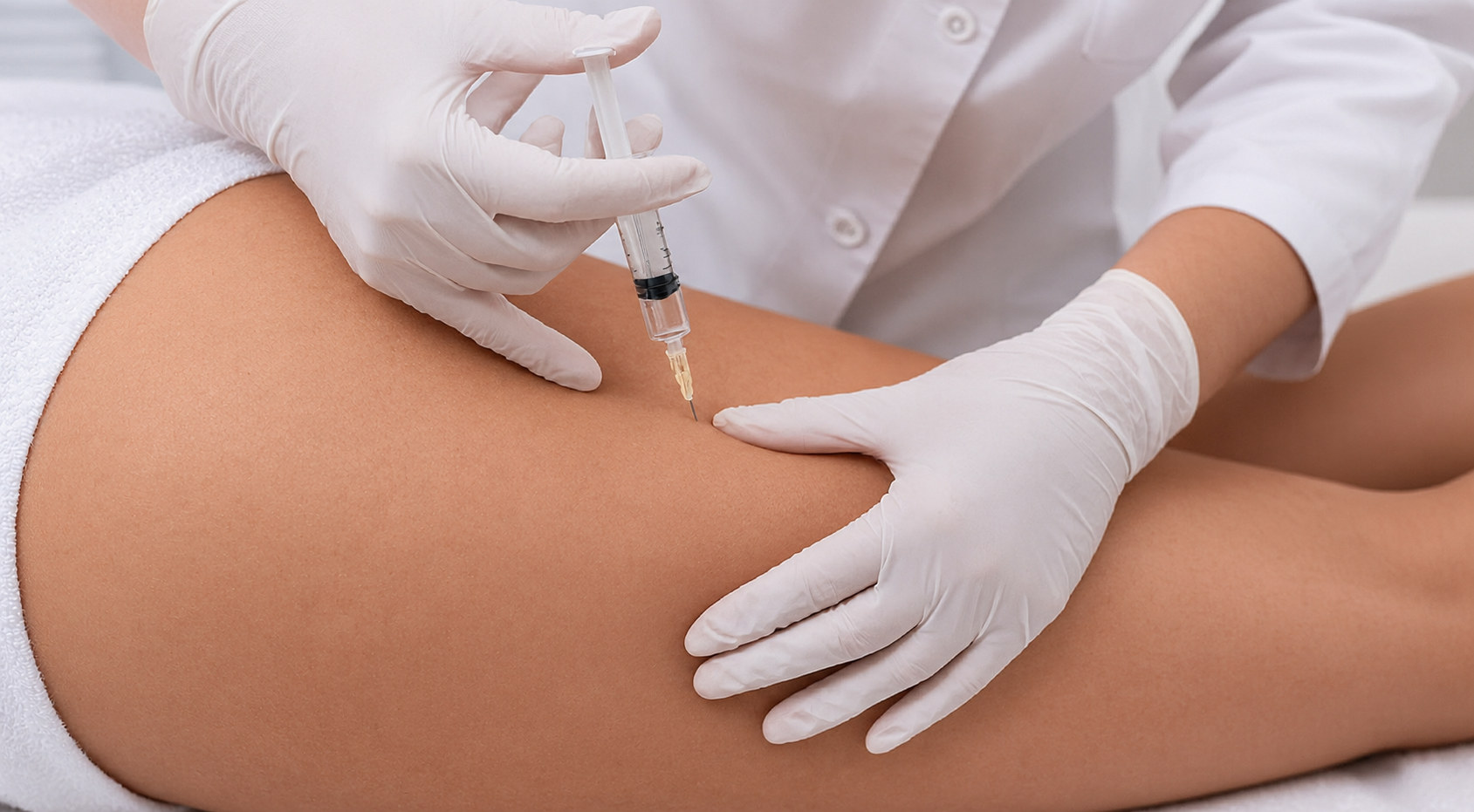
Rather than describing a specific injectable, mesotherapy refers to the administration of multiple small injections into the dermis with the aim of delivering active ingredients directly where they are intended to act while minimizing systemic exposure.
What is injected can vary considerably between clinics and countries. Depending on the treatment protocol, preparations may contain hyaluronic acid, vitamins, amino acids, peptides, antioxidants, nucleotides, minerals, or other compounds. This variability explains why mesotherapy has both legitimate clinical applications and a long history of exaggerated marketing claims.
Originally developed in France by Dr. Michel Pistor during the 1950s to treat vascular disorders and pain, mesotherapy gradually expanded into aesthetic medicine. Today, it is widely offered throughout Europe and Latin America.
In the United States, however, the conversation is different. While technique remains important, regulatory compliance and product selection are equally critical, making the US approach distinct from many international markets.
What Is Actually Injected During Mesotherapy?
One of the most common misconceptions is that mesotherapy always involves the same solution.
In reality, there is no universal mesotherapy formula.
Depending on the clinic and treatment objective, preparations may include combinations of:
- Non-crosslinked hyaluronic acid
- Vitamins
- Amino acids
- Antioxidants
- Peptides
- Minerals
- Nucleotides
- Plant-derived ingredients
- Other biologically active compounds
Protocols intended to improve skin quality generally focus on hydration and antioxidant support.
Hair restoration protocols may incorporate ingredients intended to support scalp health or hair follicles.
Historically, some formulations promoted for localized fat reduction included phosphatidylcholine or deoxycholate.
The important point is that different ingredients serve different purposes, and treatments should never be viewed as interchangeable simply because they are all described as “mesotherapy.”
Understanding the Regulatory Situation in the United States
For US medical aesthetic practices, regulation is often more important than technique.
Mesotherapy itself is a delivery method rather than an FDA-approved product.
Many commercial mesotherapy cocktails marketed internationally do not have FDA approval for aesthetic injection in the United States.
Responsibility for product selection, sourcing, and lawful use ultimately rests with the supervising healthcare provider and the practice, not the company selling the product.
The FDA has also issued warnings regarding certain injectable lipolytic products promoted for fat reduction.
Currently, deoxycholic acid (Kybella®) is the only FDA-approved injectable treatment for reducing submental fat, and that approval applies only to its specific indication.
For medical aesthetic assistants, understanding this distinction is important. Product selection is a medical and regulatory decision that should always remain under the responsibility of appropriately licensed healthcare professionals.
Injection Depth and Treatment Techniques
The defining characteristic of mesotherapy is where the product is placed.
Unlike fillers or deeper injectable treatments, mesotherapy deposits small quantities of solution within the dermis, generally between 0.5 mm and 4 mm beneath the skin surface.
Maintaining a consistent injection depth is essential for achieving predictable and even results.
Three injection techniques are commonly described.
Nappage
Nappage uses rapid, superficial, oblique injections delivered across a treatment area.
Small amounts of product are deposited with each injection, creating broad distribution throughout the superficial dermis.
Papule Technique
The papule technique creates small intradermal blebs that remain temporarily visible after treatment.
These deposits allow ingredients to disperse gradually within the dermis over time.
Temporary papules are considered an expected finding following this technique.
Point-by-Point Technique
Point-by-point injections place slightly larger deposits into selected locations at greater spacing.
This technique is commonly discussed in scalp protocols and treatments requiring more targeted placement.
Injection depth is not simply a matter of preference.
Depositing products too deeply may reduce their intended effect while increasing the likelihood of prolonged swelling or palpable nodules.
Injecting too superficially may result in persistent papules or uneven distribution.
For this reason, consistency is one of the defining characteristics of high-quality mesotherapy treatments.
Who May Be a Candidate for Mesotherapy?
Mesotherapy is not intended for every patient or every aesthetic concern.
Candidate selection depends on several factors, including medical history, skin condition, treatment goals, and the products being considered.
Following an appropriate clinical evaluation, mesotherapy may be discussed for patients interested in:
- Improving skin hydration.
- Mild improvements in skin texture.
- Early signs of skin aging.
- Dull or tired-looking skin.
- Certain hair restoration protocols.
- Combination treatment plans alongside other aesthetic procedures.
Not every patient seeking skin rejuvenation is automatically an ideal candidate.
A thorough consultation with an appropriately licensed healthcare professional remains essential before deciding whether mesotherapy is suitable.
Where Is Mesotherapy Used, and What Does the Evidence Say?
The scientific evidence supporting mesotherapy varies considerably depending on the indication being treated.
Skin Quality
For skin rejuvenation, mesotherapy using hyaluronic acid-based formulations has shown measurable improvements in hydration together with modest improvements in skin texture and fine lines.
Treatment protocols commonly involve three to six sessions, followed by maintenance treatments.
Although published research supports these findings, most studies remain relatively small and use different formulations and treatment protocols, making direct comparison difficult.
Current evidence suggests that mesotherapy may improve skin quality in selected patients, but additional high-quality clinical research is still needed to establish standardized protocols and long-term outcomes.
Hair Restoration
Mesotherapy has also been investigated as part of certain hair restoration protocols.
Some treatments involve vitamins, peptides, or other ingredients delivered into the scalp.
Results remain inconsistent across published studies, and mesotherapy is generally discussed alongside therapies such as topical medications or platelet-rich plasma rather than as a standalone treatment.
Localized Fat Reduction
The weakest evidence exists in the area of injection lipolysis.
Historically, some injectable compounds promoted for fat reduction have been associated with complications including prolonged inflammation, nodules, contour irregularities, and skin necrosis.
For US practices, this area also carries the greatest regulatory considerations.
How Does Mesotherapy Differ from Skin Boosters?
Mesotherapy and injectable skin boosters are often confused because both involve multiple superficial injections aimed at improving skin quality.
However, they are not the same treatment.
In general, skin boosters use a single stabilized hyaluronic acid product with a clearly defined formulation and, in some cases, specific regulatory approval or clearance. The product is injected following a standardized treatment pattern designed to improve hydration, elasticity, and overall skin quality.
Mesotherapy, on the other hand, usually involves a multi-ingredient preparation containing combinations of vitamins, amino acids, antioxidants, peptides, minerals, nucleotides, or non-crosslinked hyaluronic acid. Treatments typically involve a greater number of small injections and usually require more frequent maintenance sessions.
Patients often perceive the two treatments as interchangeable because both are promoted for skin rejuvenation. Understanding the distinction helps clinical staff explain why different products, treatment schedules, and expected outcomes may vary between procedures.

Who Should Avoid Mesotherapy?
Mesotherapy is not appropriate for every patient.
Treatment may need to be postponed or avoided in individuals with:
- Active skin infections.
- Active inflammatory skin disease.
- Active herpes simplex infection.
- Pregnancy or breastfeeding.
- Known allergy to treatment components.
- Bleeding disorders.
- Current anticoagulant therapy.
- Uncontrolled autoimmune disease.
- A history of keloid or hypertrophic scarring.
- Medical conditions requiring further evaluation before aesthetic treatment.
Appropriate patient selection always begins with a medical consultation and should follow the protocols established by the supervising healthcare provider.
Recovery and Aftercare
Recovery following mesotherapy is generally mild, although experiences vary depending on the treatment area, products used, and individual response.
Common short-term findings include:
- Mild redness.
- Small papules or bumps.
- Pinpoint bruising.
- Temporary swelling.
- Mild tenderness.
These reactions usually improve within several hours to a few days.
Patients are commonly advised to:
- Avoid makeup for the remainder of the day.
- Avoid strenuous exercise for approximately 24 hours.
- Avoid saunas, hot tubs, and excessive heat.
- Protect the treated area from excessive sun exposure.
- Follow any additional aftercare instructions provided by the clinic.
Following scalp mesotherapy, patients are often advised to postpone hair washing until the following day.
When Should Clinical Staff Escalate Concerns?
While mild post-treatment reactions are expected, some findings require prompt medical assessment.
Clinical staff should notify the supervising provider if patients report:
- Increasing pain rather than gradual improvement.
- Persistent or enlarging nodules.
- Worsening redness associated with warmth.
- Purulent discharge.
- Fever.
- Blanching or areas of dusky skin discoloration.
- Any unexpected or rapidly progressing symptoms.
Prompt documentation, standardized photography, and same-day escalation are important components of patient safety.
The Role of the Aesthetic Medical Assistant
The Aesthetic Medical Assistant (AMA) does not diagnose conditions, select injectable products, or perform injections unless permitted by applicable laws and the supervising provider.
However, the assistant plays a critical role in ensuring consistency, patient safety, and efficient clinical workflow.
Responsibilities may include:
- Preparing treatment rooms.
- Verifying product names, lot numbers, and expiration dates.
- Confirming that products match the patient’s treatment record.
- Preparing sterile supplies.
- Applying topical anesthetic when indicated by clinic protocol.
- Assisting with standardized clinical photography.
- Documenting products, treatment areas, injection techniques, and immediate observations.
- Providing written and verbal aftercare instructions.
- Scheduling follow-up appointments and treatment series.
Because mesotherapy often produces gradual improvements over multiple sessions, consistent documentation and photography are essential for evaluating treatment progress objectively.
State Regulations and Scope of Practice
Who may legally perform mesotherapy varies across the United States.
State laws determine which healthcare professionals may perform intradermal injections and under what level of physician supervision.
Product sourcing may also involve federal and state pharmacy regulations, particularly when compounded preparations are used.
Medical aesthetic assistants should always work within their authorized scope of practice and follow the protocols established by their supervising provider and state licensing authorities.
If there are topics you would like to see covered next, write to us at editorial@upsthetics.com.
Disclaimer: This content is provided for educational and informational purposes only. It does not constitute medical advice, diagnosis, treatment recommendations, or legal guidance. Product availability, regulatory status, and scope of practice vary by jurisdiction. Medical aesthetic procedures should always be performed or supervised by appropriately licensed healthcare professionals in accordance with applicable laws and regulations.
FAQS
What is mesotherapy?
Mesotherapy is an injection technique that delivers small amounts of selected ingredients into the dermis using multiple superficial injections. It is a delivery method rather than a specific product.
Is mesotherapy FDA approved?
Mesotherapy itself is a technique rather than an FDA-approved treatment. Many injectable formulations marketed internationally do not have FDA approval for aesthetic injection in the United States.
How many mesotherapy sessions are usually recommended?
Many skin rejuvenation protocols involve three to six treatment sessions followed by maintenance, although recommendations vary depending on the patient’s goals and the products used.
Is mesotherapy painful?
Most patients describe mesotherapy as mildly uncomfortable rather than painful. Topical anesthetic may be used depending on the treatment area and clinic protocol.
How long do mesotherapy results last?
Results vary according to the treatment protocol, products used, and individual patient characteristics. Maintenance treatments are commonly recommended because improvements are generally temporary.
Can mesotherapy be combined with other aesthetic treatments?
Yes. Mesotherapy may be incorporated into broader treatment plans that include skin boosters, microneedling, laser procedures, or other aesthetic treatments when considered appropriate by the treating provider.
What are the most common side effects?
Temporary redness, swelling, papules, bruising, and mild tenderness are among the most commonly reported short-term effects.
Does mesotherapy remove fat?
Injection lipolysis using unapproved compounds remains controversial and carries regulatory considerations in the United States. Deoxycholic acid (Kybella®) is currently the only FDA-approved injectable treatment for submental fat reduction.
How is mesotherapy different from skin boosters?
Skin boosters generally involve a single stabilized hyaluronic acid product administered using standardized injection patterns, whereas mesotherapy typically uses multi-ingredient preparations delivered through numerous superficial injections.
Who should perform mesotherapy?
Mesotherapy should only be performed by appropriately licensed healthcare professionals, or by professionals legally authorized to do so under applicable state laws and appropriate medical supervision. Continue Learning About Injectables & Treatments Mesotherapy is just one of many treatments used in modern medical aesthetics. Understanding how injectable procedures work, and where their limitations lie, helps professionals communicate more confidently, support clinical workflows, and contribute to safe, patient-centered care. Explore more educational resources in the Upsthetics blog to continue expanding your knowledge of injectables, skin science, patient safety, and evidence-based aesthetic medicine.
Stay Updated
Related posts

Pressotherapy for lymphatic drainage: benefits, safety considerations, and professional use
How Platelet Rich Plasma and PRF Are Prepared and Used in Aesthetic Practice

What facial contouring actually means in a medical aesthetic practice
About the author
