
Recognizing Over-Exfoliated Skin Before You Treat It
Category Skin Science
Author Upsthetics Editorial Team
A patient books a facial and arrives with skin that is red across the cheeks, tight, faintly shiny, and scaling around the nostrils. She describes herself as sensitive and says nothing has worked for months. She is also using a glycolic toner every morning, a retinol every night, a weekly enzyme mask, and a cleansing device.
This is the single most common presentation in aesthetic clinics that is entirely produced at home, and it is the one most likely to be treated rather than recognized. For a licensed esthetician or an Aesthetic Medical Assistant (AMA), catching it at intake is worth more than anything that happens afterward in the treatment room.
The routine that produces it
Over-exfoliation is almost never one aggressive event. It is an accumulation of individually reasonable decisions. An acid toner marketed for daily use. A retinoid ramped up faster than the skin adapted. A physical scrub or cleansing brush added for texture. A weekly mask. A professional peel every three or four weeks on top of all of it.
Each product is defensible in isolation, and the patient has usually followed every instruction on every label. What no label accounts for is the other five products, and no single manufacturer has any incentive to tell a customer to use less.
Two factors accelerated this considerably. High-potency actives that were once professional-only became widely available at consumer prices, and multi-step routines with layered actives became the default recommendation across social platforms. The result is a population arriving at clinics with barrier damage caused by diligence rather than neglect.
What it looks like at intake
The presentation is consistent enough to be recognized in a couple of minutes.
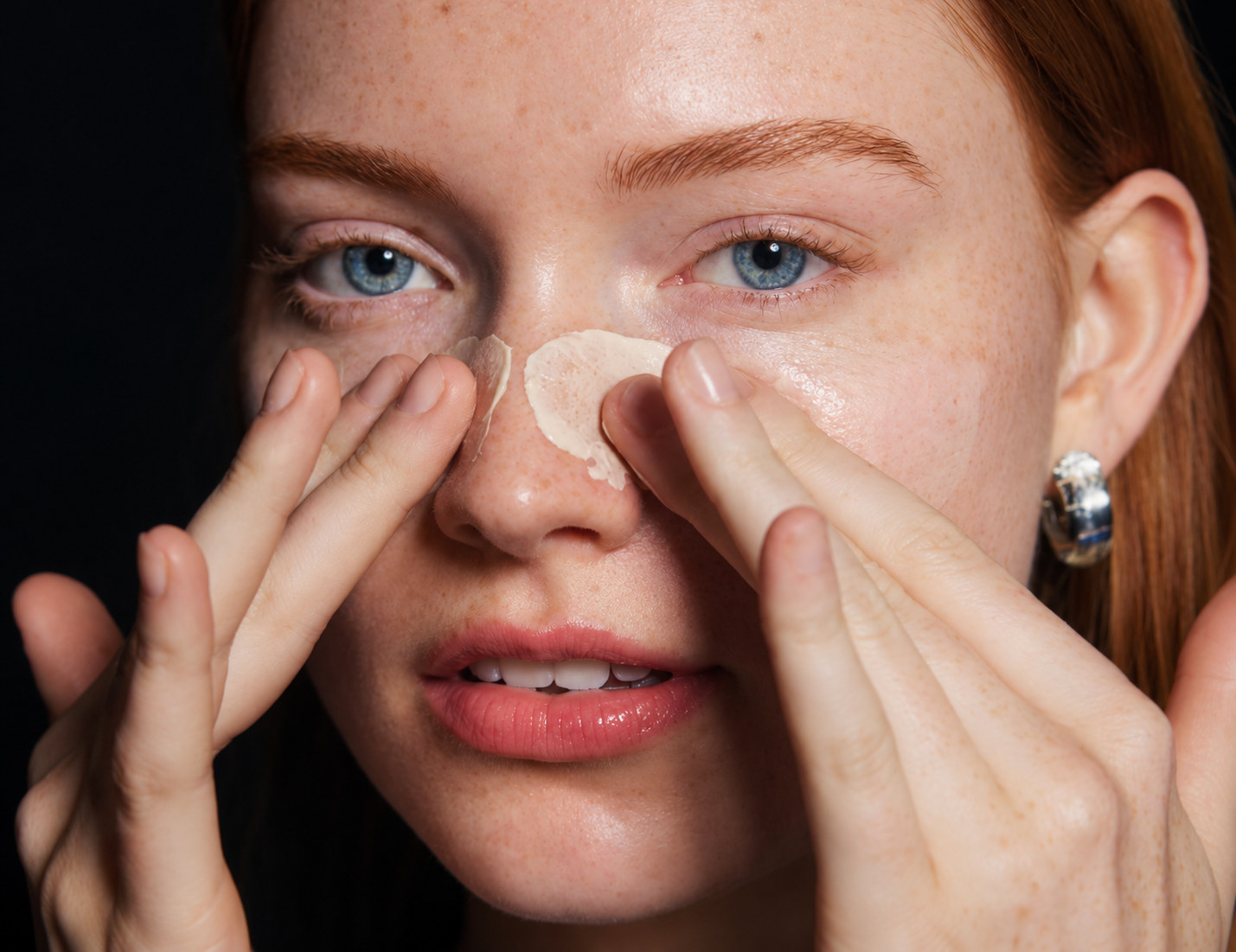
Skin stings on contact with products that should be inert, including plain water and fragrance-free moisturizer. Baseline redness sits across the central face, often with a low glassy sheen that patients describe as glowing and clinicians recognize as thinned. Texture is uneven, with fine scaling that flakes rather than sheds. The skin reads as oily and tight simultaneously, which is barrier loss driving compensatory oil production rather than genuine oiliness.
The history tells the rest. Ask what has been applied in the past seven days and let the patient list everything, including what they consider too minor to mention. Ask when the sensitivity started and what they changed in the two months before that. Ask what they have already tried to fix it, because the answer is frequently more product.
What it is not
Several conditions present similarly, and distinguishing between them is a diagnosis rather than an observation. Rosacea produces persistent central erythema and flushing that predates any routine change. Perioral dermatitis produces small papules around the mouth and nose and often follows topical steroid use. Allergic contact dermatitis is usually sharply demarcated, itchy, and traceable to a specific new product. Seborrheic dermatitis produces greasy scaling in a characteristic distribution.
An assistant who notices that the picture does not fit simple over-exfoliation, and says so before a treatment begins, has done exactly the right thing. Deciding what it actually is belongs to the physician.

The conversation that makes or breaks it
The hardest part of this is not clinical. It is telling someone that the expensive routine they have been faithfully following is the cause of the problem they came in to solve, without making them feel foolish for having followed it.
What works is removing the blame from the patient and putting it where it belongs. The products were sold with instructions that assumed each was the only thing being used. Following all of those instructions at once produces a dose no single label anticipated. That framing is accurate, and it lets the patient step back from the routine without having to concede that they were careless.
What does not work is presenting the reset as a treatment plan with products attached. A patient who has just been told they are using too much and is immediately sold four replacements will not believe the first part.

Why patients come back too early
The reset feels like doing nothing, and it produces no visible improvement for the first two or three weeks. Patients who have spent years associating skincare with activity find this genuinely difficult, and a meaningful proportion abandon it and return to the routine that caused the problem.
Setting the timeline explicitly at the start is what prevents this. Tell the patient that the first two weeks will feel like regression, that comfort usually returns before appearance does, and that the full reset runs eight to twelve weeks. A patient who expects a slow curve stays on it. A patient who expects results in ten days does not.
The same applies to rebooking. A patient pushing to be treated before the barrier has recovered is the most common route back into the cycle, and holding that line is part of the job.
Scope and escalation
Recognizing the pattern, taking a complete product history, documenting with photographs, and explaining the reset are all within the range of a well-trained assistant or esthetician working under supervision.
Diagnosis, prescription, and the decision about whether and when to treat are not. Open or weeping skin, blistering, spreading warmth, pain out of proportion to any topical product, or new pigment change all go to the supervising physician immediately rather than into a reset protocol.
If there are topics you would like to see covered next, write to us at editorial@upsthetics.com.
This article is educational and does not constitute medical advice. Assessment, diagnosis, and treatment decisions rest with licensed professionals, and scope of practice differs from state to state.
FAQS
How can you tell the difference between over-exfoliated skin and naturally sensitive skin?
Although both conditions can present with redness, irritation, burning, and increased reactivity, their history is often different. Naturally sensitive skin is usually a long-standing characteristic, whereas over-exfoliation typically develops after introducing new exfoliating products, increasing treatment frequency, or combining multiple active ingredients. Symptoms often improve when the skincare routine is simplified and the skin barrier is allowed to recover.
How long does it take for an over-exfoliated skin barrier to recover?
Recovery varies depending on the severity of barrier damage and the individual’s skin condition. Many patients notice improved comfort within two to four weeks after discontinuing irritating products and following a gentle skincare routine. Complete barrier recovery and the gradual reintroduction of active ingredients may take eight to twelve weeks or longer in more severe cases.
Can patients continue using active ingredients during recovery?
In most cases, the initial recovery phase focuses on minimizing irritation by temporarily discontinuing exfoliating acids, retinoids, benzoyl peroxide, and other resurfacing products. Once the skin barrier has stabilized and no longer reacts to basic skincare products, active ingredients can often be reintroduced gradually, one product at a time, according to the supervising provider’s recommendations.
Should aesthetic treatments be postponed if a patient has an impaired skin barrier?
Many elective aesthetic procedures are delayed until the skin barrier has adequately recovered. Performing treatments on compromised skin may increase irritation, prolong recovery, and raise the risk of complications. The decision to proceed always rests with the treating healthcare professional, while assistants and estheticians play an important role in recognizing barrier impairment and communicating their observations before treatment begins.
What are the most common signs of an over-exfoliated skin barrier?
Common symptoms include persistent redness, burning, stinging, excessive dryness, tightness, flaking, increased sensitivity to skincare products, and irritation after products that were previously well tolerated. Recognizing these signs early allows professionals to recommend appropriate adjustments before barrier damage becomes more severe.
Stay Updated
Related posts

The Skin Microbiome and Why Some Patients Tolerate Treatments Poorly

Smoking and skin aging: what aesthetic professionals and patients should know
Skin aging by decade: what changes and what is commonly discussed in aesthetic practice
About the author
