
Skin aging by decade: what changes and what is commonly discussed in aesthetic practice
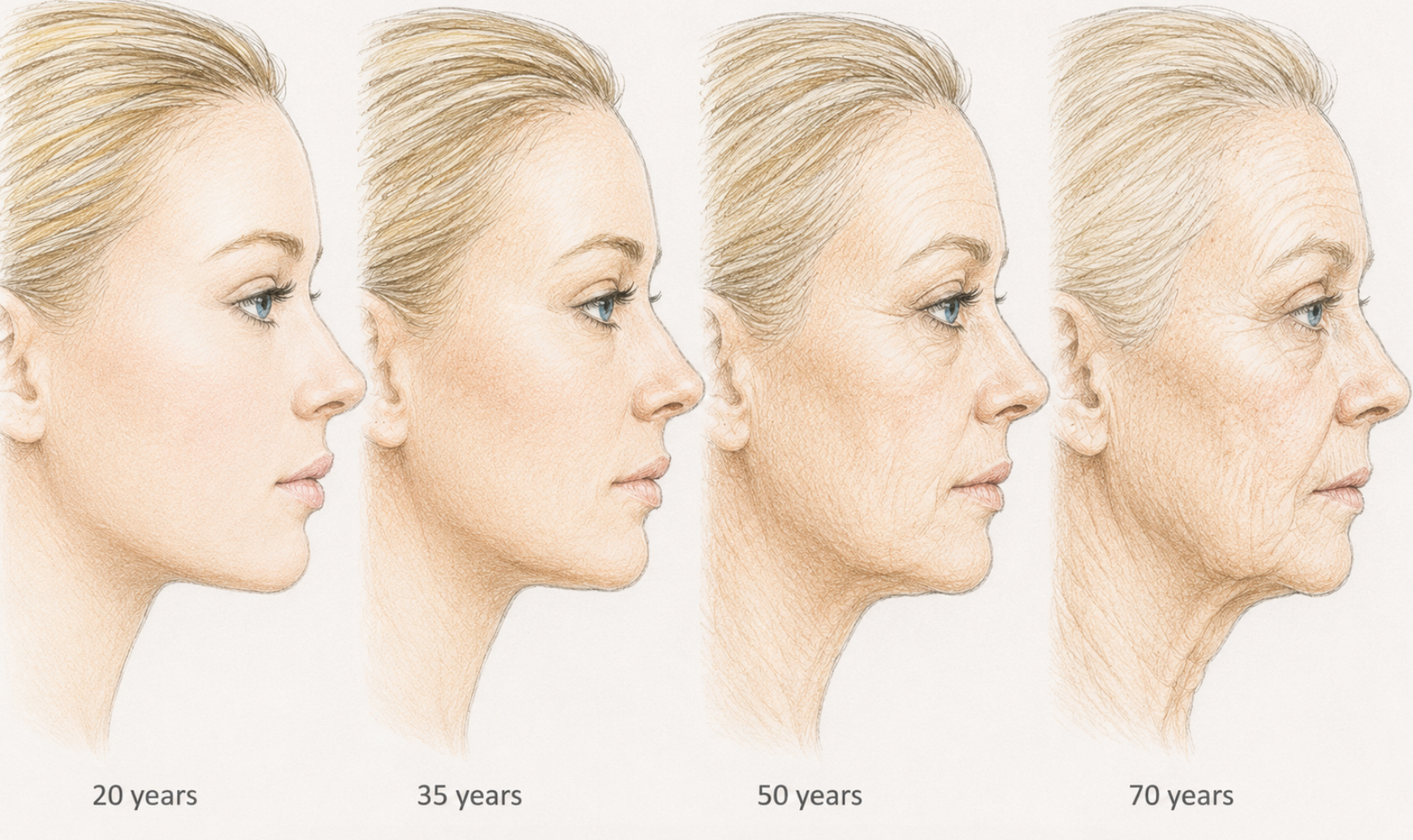
Skin aging is a natural biologic process influenced by genetics, sun exposure, hormonal changes, lifestyle habits, and skincare , and how it presents may vary considerably between individuals.
Aesthetic medicine approaches skin aging by decade because concerns, priorities, and treatment conversations evolve over time, and what is relevant in the 30s differs meaningfully from what is discussed in the 50s or 60s.
Lifestyle habits , including sun protection, nutrition, hydration, sleep, and physical activity , are part of every decade’s healthy aging conversation alongside treatment options.
Treatment discussions in aesthetic practice are not recommendations; they are categories of options that qualified licensed professionals evaluate individually based on patient goals, health history, and clinical judgment.
For aesthetic medical assistants and estheticians, understanding how skin aging evolves across life stages supports more informed patient communication, stronger clinical awareness, and more relevant educational conversations in aesthetic environments.
Skin aging is not a single event , it is a continuous biologic process that unfolds differently for each person, shaped by a combination of genetics, cumulative sun exposure, hormonal shifts, lifestyle patterns, and the skincare and treatment decisions made along the way. In aesthetic medicine, that process is often discussed decade by decade, because the concerns people bring into clinical environments, and the conversations that are appropriate to have, change significantly over time.
For aesthetic medical assistants and estheticians, understanding how skin changes across life stages , and what is commonly discussed in aesthetic practice at each stage , is foundational professional knowledge. It supports more accurate patient communication, more relevant educational conversations, and a clearer understanding of the clinical environment they work in. This article covers both: the biological changes that may occur across decades, and the treatment categories that are commonly discussed in professional aesthetic settings at each stage.

Skin aging in your 30s: prevention and early intervention
For many women, the 30s mark the decade when early visible changes begin to appear , often subtly at first, then more noticeably as the decade progresses. Collagen production begins to slow, and the cumulative effects of sun exposure and lifestyle habits start to become visible in ways they may not have been in the 20s.
Changes that may become noticeable in this decade include:
- Fine lines beginning to appear, particularly around the eyes and forehead
- Early changes in skin hydration and texture
- Mild collagen-related changes that affect overall skin firmness
- Uneven skin tone related to cumulative sun exposure
Supportive habits and treatment conversations in your 30s
In the 30s, the conversation in aesthetic medicine tends to be prevention-oriented. Daily broad-spectrum sun protection remains the single most consistently supported habit for slowing the visible effects of aging. Consistent skincare routines, adequate nutrition and hydration, and healthy lifestyle patterns are also part of this foundation.
In aesthetic practice, some women may choose to discuss early-intervention options with qualified licensed professionals. Conversations in this stage may sometimes include superficial chemical peels for skin texture and tone, light-based or energy-based skin rejuvenation approaches, neuromodulator treatments for dynamic expression lines, and hydration- or skin-quality-focused treatment concepts. For aesthetic medical assistants and estheticians supporting client-facing roles in aesthetic environments, understanding that these are exploratory discussions , not treatment recommendations , is an important professional distinction.
Skin aging in your 40s: texture, firmness, and volume
The 40s often bring a broader range of visible changes as the rate of collagen and elastin decline accelerates and hormonal fluctuations begin to influence skin quality more noticeably. Changes in facial volume , the gradual redistribution and loss of subcutaneous fat , may also become more apparent during this decade.
Changes that may become more noticeable in the 40s include:
- More visible expression lines and deepening of existing creases
- Changes in skin firmness and a reduction in elasticity
- Volume-related changes in areas such as the cheeks and temples
- Texture and tone concerns that may be more resistant to skincare alone
Supportive habits and treatment conversations in your 40s
Supportive habits in this decade continue to include consistent sun protection and barrier-supportive skincare, alongside strength training and physical activity, nutrition, and stress and sleep management. In aesthetic practice, conversations may expand to include neuromodulator treatments for dynamic wrinkles, hyaluronic acid fillers in volume-related discussions, energy-based and radiofrequency-based treatment concepts, and collagen-support-oriented approaches.
Aesthetic medical assistants working in clinical environments where these treatments are offered play an important role in supporting patient communication around what these treatments involve, what realistic outcomes look like, and what the pre- and post-care process requires. That communication support is more effective when it is grounded in genuine understanding of the aging changes that make these conversations relevant.
Skin aging in your 50s: hormonal transition and skin quality
For many women, the 50s are defined in part by the hormonal transition of perimenopause and menopause, which can have a meaningful influence on skin. Estrogen plays a role in collagen production, skin hydration, and overall skin quality , and as estrogen levels decline, some of these effects may become more pronounced.
Changes that may become more noticeable in this decade include:
- Increased skin dryness and a reduced ability to retain moisture
- Further reduction in elasticity and skin firmness
- Changes in skin thickness that may affect how skin feels and responds
- Skin quality concerns that may require adapted skincare and treatment approaches
Supportive habits and treatment conversations in your 50s
Nutrition supportive of overall wellness, consistent hydration, gentle but effective skincare, and strength and mobility-supportive physical activity all remain relevant in this decade. In aesthetic practice, conversations may include hyaluronic acid fillers in age-related volume discussions, biostimulatory treatment concepts, energy-based and radiofrequency-based approaches, and skin rejuvenation strategies evaluated by licensed professionals.
For aesthetic medical assistants and estheticians, the 50s represent a decade where patient communication often requires particular sensitivity and nuance. Clients may be navigating a significant life transition alongside visible changes in their appearance, and the ability to engage with those conversations thoughtfully , acknowledging what is happening biologically, explaining what the treatment options involve, and maintaining realistic expectations , is a meaningful professional skill.
Skin aging in your 60s and beyond: fragility and individualized care
In the 60s and beyond, skin may become more fragile, more sensitive, and more variable in how it responds to both products and treatments. The cumulative effects of decades of sun exposure, hormonal changes, and natural biologic aging converge, and individualization becomes increasingly important in any discussion of skin care or aesthetic treatment.
Changes that may be more prominent in this stage include:
- Increased dryness and sensitivity that may require gentler product formulations
- Thinner-feeling skin that may be more prone to irritation or slower to recover
- Greater variability in how skin responds to treatments compared with earlier decades
- Changes in resilience that affect both appearance and healing
Supportive habits and treatment conversations in your 60s and beyond
Gentle skincare approaches, ongoing sun protection, nutrition, hydration, and physical activity adapted to individual needs remain foundational at this stage. In aesthetic practice, some women may choose to discuss non-invasive skin-quality-focused approaches, energy-based treatment concepts in appropriate candidates, and individualized rejuvenation strategies evaluated in licensed clinical settings. The emphasis on individualization is not incidental , what works well for one person in this decade may not be appropriate for another, and the role of careful clinical assessment is more important than ever.
For aesthetic medical assistants supporting patients in this age group, an awareness of skin fragility and the importance of individualized approaches helps inform more sensitive and accurate communication , including knowing when to escalate questions to the treating licensed professional rather than answering directly.
Factors that influence skin aging at any age
Across all decades, certain factors consistently appear in healthy aging conversations in aesthetic medicine. For aesthetic medical assistants and estheticians, being able to discuss these factors accurately , without overstating or understating their impact , is part of the educational role they play in client-facing and patient-facing settings.
Factors commonly discussed in relation to skin aging across life stages include:
Sun exposure , cumulative UV damage is one of the most consistently cited contributors to visible skin aging
- Smoking , associated with accelerated skin aging through multiple mechanisms
- Nutrition , diet quality and specific nutrient intake may influence skin health over time
- Sleep quality , restorative sleep supports many skin repair and renewal processes
- Stress , chronic stress may influence skin through hormonal and inflammatory pathways
Physical activity , associated with broader health benefits that may support skin wellness over time
Long-term habits matter more than any single product or treatment. This is a point that aesthetic medical assistants and estheticians can communicate with confidence, and it grounds client conversations in a realistic and empowering framework rather than one dependent on unrealistic outcome expectations.
Why this topic matters for aesthetic medical assistants and estheticians
Understanding how skin aging evolves across decades is not background knowledge that sits unused in a clinical environment , it is actively relevant to the work aesthetic medical assistants and estheticians do every day. Clients and patients come into aesthetic environments at every life stage, and they come with questions that reflect where they are in their own aging journey.
For aesthetic medical assistants working in clinical settings alongside licensed professionals, understanding the aging changes associated with different life stages supports more informed participation in treatment workflows, more accurate pre- and post-care communication, and a stronger ability to recognize when a client’s concern requires escalation rather than a direct answer.
For estheticians, this knowledge supports more relevant skincare recommendations, more grounded conversations about what clients can realistically expect from products and treatments at different life stages, and a clearer sense of when to refer clients to a licensed medical professional for evaluation. For both roles, it is a foundation for the kind of professional credibility that clients recognize and trust. Upsthetics publishes educational content designed specifically for aesthetic medical assistants, estheticians, and students building their professional foundation in the US aesthetic industry.
Sources and references
American Academy of Dermatology Association. Skin aging: causes, prevention, and treatment overview. American Academy of Dermatology.
National Institutes of Health (NIH). Healthy aging and skin biology resources. National Library of Medicine.
Journal of Clinical Medicine. Research related to skin aging mechanisms and aesthetic treatment approaches.
If there are topics you would like to see covered next, write to us at editorial@upsthetics.com.
Disclaimer: This content is for educational purposes only and does not constitute medical advice, legal advice, or professional guidance. Treatment decisions belong exclusively to qualified licensed professionals.
FAQS
At what age do some women begin discussing aesthetic treatments?
Some women begin exploring prevention-oriented or skin-quality-focused conversations with aesthetic professionals in their 30s, while others may not consider these discussions until later decades. Individual goals, concerns, and timelines vary considerably, and there is no universal starting point.
Are neuromodulators and hyaluronic acid fillers commonly discussed in aesthetic practice?
Yes. Neuromodulator treatments and hyaluronic acid fillers are among the most commonly discussed categories in aesthetic medicine conversations across multiple decades. Whether they are appropriate for any individual depends on professional evaluation by a qualified licensed professional , not on age alone.
How does hormonal change in the 50s affect skin?
The hormonal transition of perimenopause and menopause is associated in many women with increased skin dryness, reduced elasticity, and changes in skin thickness and quality. These changes reflect the role estrogen plays in collagen production and skin hydration, and they often shift both skincare priorities and aesthetic treatment conversations in this decade.
Can lifestyle habits really affect how skin ages?
Yes , and this is one of the most consistently supported points in healthy aging discussions. Sun protection, nutrition, sleep, stress management, and physical activity all have documented relationships with overall health that extend to skin. These habits are part of every decade’s conversation alongside treatment options.
What role do aesthetic medical assistants play in aging-related client conversations?
Aesthetic medical assistants support patient communication around treatment options, pre- and post-care processes, and realistic outcome expectations. They help clients navigate the clinical environment and understand what is involved in the treatments being discussed. Specific treatment recommendations and clinical decisions belong to the licensed professional overseeing care.
Does skin care become more important as skin ages?
Consistent skincare , particularly sun protection, hydration, and barrier support , remains relevant at every age. What may change across decades is the formulation preferences, the tolerance for certain active ingredients, and the degree to which skincare alone is sufficient versus when professional treatment discussions become more relevant.
Why should estheticians understand skin aging by decade?
Because clients come to estheticians at every life stage with questions that reflect their current aging concerns. An esthetician who understands what is happening biologically in a client’s 40s or 60s can provide more accurate, relevant, and trustworthy guidance , and can recognize more clearly when a concern is beyond the scope of esthetic practice and warrants referral to a licensed medical professional.
Stay Updated
Related posts
Smoking and skin aging: what aesthetic professionals and patients should know
Recognizing Over-Exfoliated Skin Before You Treat It
How Fitzpatrick Phototype Changes Treatment Decisions in Aesthetic Practice
About the author
