
The Skin Microbiome and Why Some Patients Tolerate Treatments Poorly
Category Skin Science
Author Upsthetics Editorial Team
Every clinic has the patient who reacts to everything. A gentle peel produces three days of redness. A new moisturizer stings. A facial that twenty other patients tolerated without comment leaves this one flushed for the rest of the week. The chart says sensitive skin, which describes the problem without explaining it.
Part of the explanation is barrier function. The other part, increasingly well documented, is the microbial community living on the skin surface and whether it is still intact.
For an Aesthetic Medical Assistant (AMA) or a licensed esthetician, this is practical rather than theoretical. Most of what disrupts the skin microbiome comes from home care habits and from treatment cadence, and both of those sit squarely inside the intake conversation.
What lives on the skin
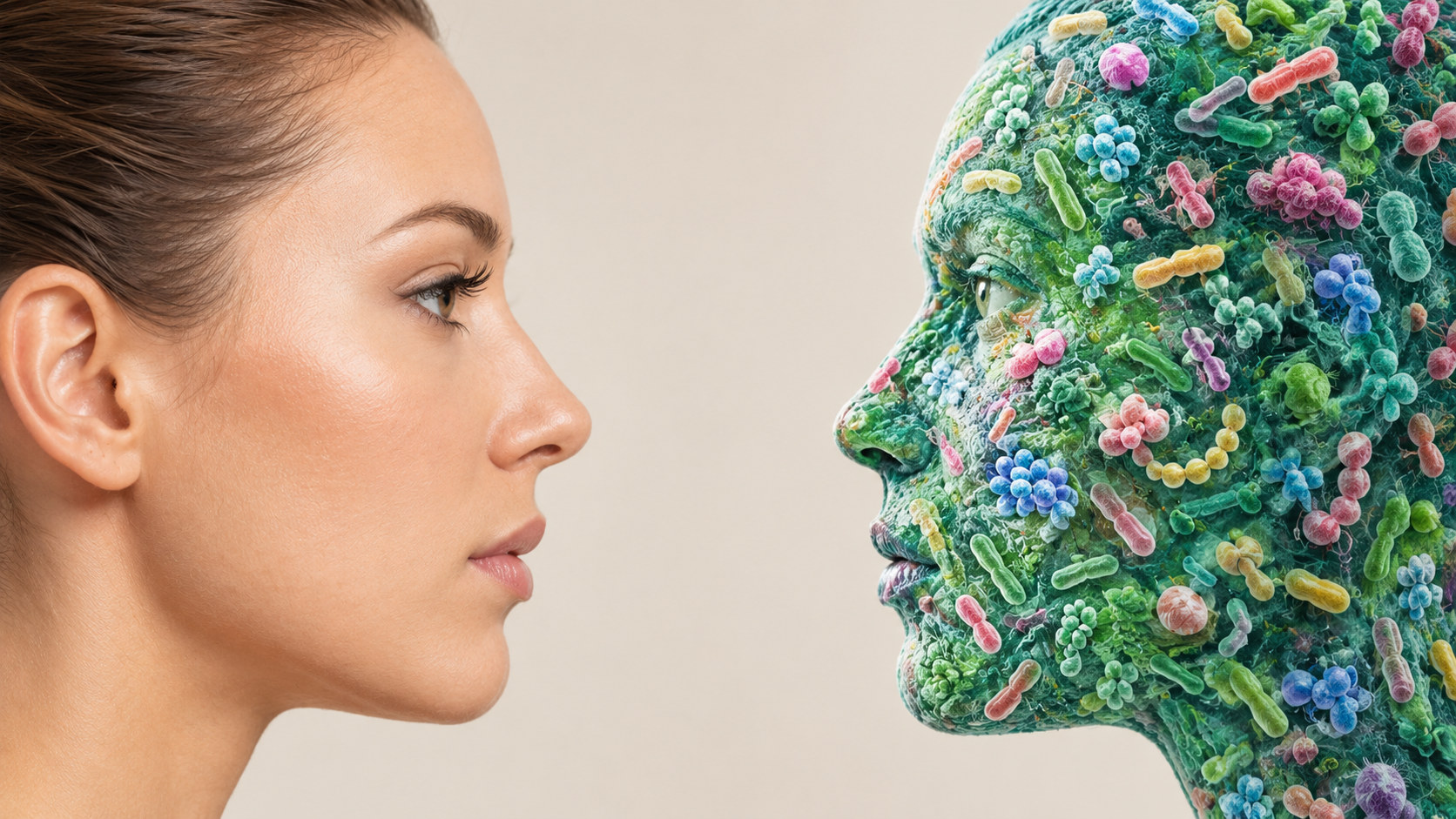
The skin carries a resident population of bacteria, fungi, viruses, and mites that varies by body site according to the environment each site provides. Sebaceous areas such as the face, chest, and back are dominated by Cutibacterium acnes, which metabolizes sebum and produces short-chain fatty acids that keep surface pH low. Moist areas favor Staphylococcus and Corynebacterium species. Dry areas carry a more mixed and more variable population. The yeast Malassezia is present across most of the body in small numbers.
Presence is not the same as pathology. C. acnes is a normal resident, and its connection to acne involves specific strains, follicular conditions, and host response rather than the organism alone. The same holds for Malassezia, which becomes a clinical problem only when local conditions allow it to overgrow.
What the community does
A stable population occupies the available space and consumes the available nutrients, which limits what an incoming pathogen can establish. Some residents go further than simple competition. Staphylococcus epidermidis produces antimicrobial peptides that specifically inhibit Staphylococcus aureus, and it contributes sphingomyelinase, an enzyme involved in generating ceramides for the barrier itself. C. acnes maintains the acidic surface pH that a large part of barrier enzymology depends on.
The community also trains the local immune system, keeping it calibrated so that ordinary contact does not provoke a response. When diversity falls, that calibration drifts toward reactivity.
This is why barrier and microbiome are best treated as one system rather than two. The barrier provides the lipid environment the residents live in, and the residents help build it. Damage one and the other follows.

What disrupts it inside a clinic
Over-exfoliation is the most common cause and rarely comes from one dramatic event. It comes from a daily acid toner, plus a weekly at-home mask, plus a professional peel every three weeks, each of which looks reasonable in isolation.
Antibacterial and sulfate-heavy cleansers strip lipids and reduce diversity, and alcohol-based toners do the same while pushing surface pH upward. Topical and oral antibiotics prescribed for acne suppress susceptible organisms broadly rather than only the intended target, and the resulting diversity loss can persist for months after the course ends.
Treatment cadence is the lever clinics control most directly and mismanage most often. Booking the next appointment before recovery is complete keeps the skin in a permanent state of repair, and a patient on that cycle becomes progressively more reactive while everyone involved assumes the products are at fault.
What dysbiosis looks like at the chair
There is no in-clinic swab that settles the question, so the assessment is observational and belongs in the intake conversation.
The skin tends to sting with products that should be inert. Baseline redness sits higher than the patient describes as normal, and flushing is easily triggered. Recovery after any procedure runs longer than the same protocol produces in comparable patients. Texture is uneven with fine scaling, and the skin often reads as oily and tight at the same time. The patient frequently reports a long list of products tried and abandoned, which is itself a useful signal.
What actually helps
The intervention that changes the most is spacing treatments further apart. It costs nothing, and it is the single variable a clinic fully controls.
Beyond that, cleansing should be gentle and close to the skin’s own pH rather than well above it. Barrier lipids delivered in a ceramide, cholesterol, and fatty acid formulation support both the barrier and the environment the residents depend on. Antibacterial products should be reserved for a clinical reason rather than used as routine hygiene.
Prebiotic and postbiotic formulations, which supply substrates or bacterial metabolites rather than live organisms, have reasonable supporting evidence for improving barrier measures and reducing reactivity. Live topical probiotics are a more crowded and less settled category, and the strain-specific claims in marketing materials generally run ahead of the published data. Recommending inside that gap is a credibility risk for the clinic.
Recovery is slow either way. Meaningful change in reactivity usually takes eight to twelve weeks of consistent, restrained care, and setting that expectation at the outset is what stops a patient from abandoning the plan in week three.
Scope and the assistant’s role
An Aesthetic Medical Assistant does not diagnose dysbiosis, prescribe treatment, or decide whether a patient should proceed. What the role does cover is still substantial. It includes taking a complete home care history rather than a summary, documenting objective observations and photographs, flagging patterns to the supervising physician, explaining to patients why spacing matters, and holding the schedule when a patient pushes to be treated early.
That last one is the hardest and the most valuable. A patient talked out of a premature appointment usually gets a better result and stays with the clinic longer.
If there are topics you would like to see covered next, write to us at editorial@upsthetics.com.
Disclaimer
This content is educational only. It does not constitute medical advice and does not qualify anyone to perform aesthetic or medical procedures. Regulations governing scope of practice differ from state to state, and every professional is responsible for practicing within their own license.
FAQS
Can a single facial damage the skin microbiome?
A single well-spaced treatment does not. Repeated aggressive treatment without adequate recovery is what produces lasting disruption.
Do probiotic skincare products restore the microbiome?
Evidence is stronger for prebiotic and postbiotic formulations than for live topical probiotics. Claims in the live probiotic category currently run ahead of the published research.
How long does it take to recover from dysbiosis?
Reactivity typically improves over eight to twelve weeks of gentle, consistent care with treatments spaced appropriately.
Is the skin microbiome the same thing as the skin barrier?
No. They are separate but interdependent. The barrier provides the environment the microbial community lives in, and the community contributes to maintaining the barrier.
Stay Updated
Related posts
Smoking and skin aging: what aesthetic professionals and patients should know
Skin aging by decade: what changes and what is commonly discussed in aesthetic practice
Recognizing Over-Exfoliated Skin Before You Treat It
About the author
